When to prune lilacs is just as important as how you prune these shrubs to ensure they produce lots of beautiful, fragrant flowers in the spring. Besides resulting in a bonanza of blooms each year, pruning lilacs (Syringa spp.) helps make lilac shrubs more shapely, strong, and healthy. So, grab your shears and read on to learn how and when to prune lilacs properly.
Benefits of Pruning Lilacs
Cutting off dead and damaged wood and controlling the number of stems on the shrub are vital to lilac care. Left unpruned, mature lilacs become choked with old wood and deadwood and produce few flowers. They also become wildly overgrown and unruly.
Here’s why you should prune lilacs:
- The shrub produces more flowers. Lilacs produce the biggest and most flowers on stems that are no more than five or six years old. Young stems are the most productive. Old stems are less productive and don’t produce as many blooms. You need to cut off the old stems so the younger stems produce more and bigger flowers. If you don’t prune lilac bushes, they eventually flower only at the tips of the top branches. You end up with a lot of shrub and very few flowers.
- Maintain a manageable size. Annual pruning keeps mature lilac shrubs from becoming leggy, tall, and unmanageable. Some lilacs grow up to 2 feet a year, so you might need to prevent them from taking up too much space in your yard. Pruning also shapes the bush into a more appealing form. You want thick and leafy lilac shrubs, not bare and leggy ones.
- The shrub is healthier. Pruning old stems gives your lilac a good framework and encourages branching and healthy leaf growth.
When to Prune Lilacs
Timing is everything. Here’s when to take the shears to your shrub.
- Prune lilacs annually once the shrub is mature. The age of maturity depends on the variety, but when the stems are 2 inches in diameter, the lilac is ready for yearly spring pruning.
- Prune lilacs immediately after the bush blooms in the spring. Lilacs set next year’s flower buds after this year’s flowers fade, giving you a narrow window for pruning. Prune too late in the season, and you won’t have flowers next spring. If you wait until late summer or fall to prune a lilac, you will cut off the developing buds and end up with no flowers the following spring.
Types of Pruning for Lilacs
There are two types of pruning for lilacs. The pruning you do depends on the age and condition of the lilac.
Maintenance Pruning
Maintenance pruning is a light trim done on young lilacs annually to keep them in shape and blooming profusely. The focus is on removing dead wood and suckers, deadheading the flowers, and trimming a foot or so off the stems.
Deadhead lilacs annually as soon as flowers fade. Cut off the old flower cluster at its base. Removing old blossoms lets the plant put more energy into growing new buds and stems rather than producing seeds.
Rejuvenation Pruning
Rejuvenation pruning is a heavy pruning done on older plants that are leggy and overgrown with a lot of wood and little foliage at the bottom of the shrub. Rejuvenation pruning—also called hard pruning—can revive an old, overgrown lilac that has been neglected. A rejuvenation prune involves cutting down a third or more of the lilac shrub’s height and width to force it into a fresh growth cycle.
A rejuvenation pruning should be done in late winter when the lilac is dormant. Heavy pruning interrupts the bloom cycle, which means you won’t have flowers in the spring, but it’s a short-term sacrifice for the plant’s long-term health. If you can’t live without flowers, do the hard prune over two years: Cut half the bush down one year, the other half the next.
Fertilize your lilac after you do a rejuvenation pruning to help fuel new growth. Use a balanced (10-10-10) fertilizer, preferably slow-release granular fertilizer, following the product instructions.
Tips for Pruning Lilacs
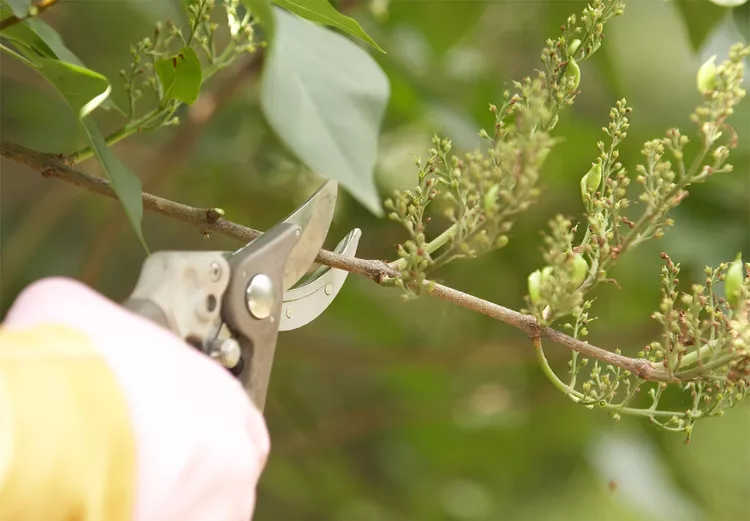
- Cut off dead, damaged, or diseased limbs and skinny suckers with a sharp pair of pruning shears. Suckers are new shoots that grow around the base of the lilac. Remove the suckers at the soil line so they don’t divert nutrients from the main shrub. Remove diseased or dead limbs at any time of the year.
- Cut off any stems larger than 2 inches in diameter. Removing these old stems keeps your lilac a tidy size and encourages blooming. For thicker branches, you might need loppers or a pruning saw. Cut these large stems off at ground level.
- Trim the new stems. Prune the tips off the new stems just above a pair of side shoots to encourage bushier growth. Create a balance of old stems and new flowering stems.
- Aim to have 10 to 12 stems on a lilac bush, with each stem being 1 to 2 inches thick.
Some years your lilacs will burst with blooms, and other years they won’t. Keep up with maintenance pruning, deadhead spent blooms, and provide the proper growing conditions, and your lilac will fill your spring with flowers.
New